Series 16: Fats
Few nutrition topics have swung as far as fat. Low-fat advice gave way to “fat is fine”, and then to a more careful message: the type of fat matters, and so does what replaces it. This article looks at what the main guidelines and the largest reviews say, and where the seeds and nuts we work with fit.
The basics: three kinds of fat
Dietary fats are classed by their chemical structure. The NHS describes the main groups this way:
- Saturated fats come mostly from animal sources such as meat and dairy, and from palm and coconut oil. The NHS says too much fat in the diet, especially saturated fat, can raise cholesterol.
- Monounsaturated fats are found in olive and rapeseed oil, avocados and some nuts, including almonds, Brazils and peanuts.
- Polyunsaturated fats include omega-6 fats, found in vegetable oils such as rapeseed, corn and sunflower and in nuts such as walnuts, almonds and cashews, and omega-3 fats, found in oily fish, flaxseed (linseed) oil, rapeseed oil and walnuts.
The NHS says saturated fats raise LDL (“bad”) cholesterol, which increases the risk of heart disease and stroke. Monounsaturated fats help keep HDL (“good”) cholesterol up while lowering LDL, and polyunsaturated fats also help lower LDL.
What the guidelines say
UK. Government guidance, quoted by the NHS, is that men should have no more than 30 g of saturated fat a day and women no more than 20 g. Children should have less than adults. The NHS advises that it is best to reduce overall fat intake and swap saturated fats for unsaturated fats.
WHO. The WHO's 2023 guideline recommends that adults keep total fat to 30% or less of energy intake. It recommends that everyone aged 2 and over has no more than 10% of energy from saturated fat and no more than 1% from trans fat, and that fat intake is mainly unsaturated. WHO says saturated and trans fats can be replaced with polyunsaturated fats, plant-source monounsaturated fats, or carbohydrates from foods with naturally occurring fibre, such as whole grains, vegetables, fruit and pulses.
The word “replaced” appears in every one of these. The guidance is about swapping, not about fat in general.
The largest review of the evidence
The most cited summary is a 2020 Cochrane review by Hooper and colleagues. It pooled 15 randomised trials with 56,675 participants, in which saturated fat intake was reduced for at least two years. The main findings were:
- Combined cardiovascular events fell by 17% (risk ratio 0.83, 95% confidence interval 0.70 to 0.98), with moderate certainty of evidence.
- The effect on all-cause mortality (RR 0.96, 0.90 to 1.03) and cardiovascular mortality (RR 0.95, 0.80 to 1.12) was not statistically significant, also with moderate certainty.
- The effects on non-fatal heart attack, total heart attack and stroke were unclear, and the certainty was low to very low.
- Larger reductions in saturated fat were linked to larger reductions in cardiovascular events. The reviewers calculated that about 53 to 56 people would need to reduce their saturated fat for roughly four years to prevent one cardiovascular event.
- Replacing saturated fat with polyunsaturated fat or with carbohydrate appeared useful, and the review found no significant difference between the two. Data on replacing it with monounsaturated fat or protein were very limited.
Two points are easy to miss. The benefit is in events such as heart attacks and strokes taken together, not in overall survival. And the review's authors point out that the result depends on what the saturated fat is replaced with.
Why the swap matters more than the subtraction
Saturated fat replaced with refined carbohydrate or sugar is not the same as saturated fat replaced with nuts, seeds and plant oils. WHO's own wording reflects this, naming whole-food carbohydrates with natural fibre rather than carbohydrate in general. Food-based swaps show how the guidance looks in practice: nut and seed butters in place of butter, cold-pressed seed oils in place of some cooking fat, and seeds in place of fatty or processed snacks.
Our ingredients and fat
The seeds and nuts we work with are plant foods whose fat is mainly unsaturated. The NHS names several of them in its lists: walnuts, flaxseed oil, almonds and cashews. For the others (pumpkin, sunflower, sesame, hemp and chia), the NHS page doesn't give details, so this article makes no claims about their fatty acid profile. The fat content of any product is on its nutrition panel.
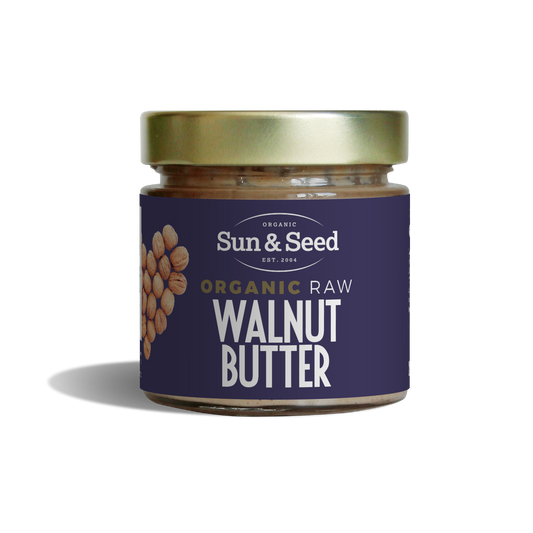
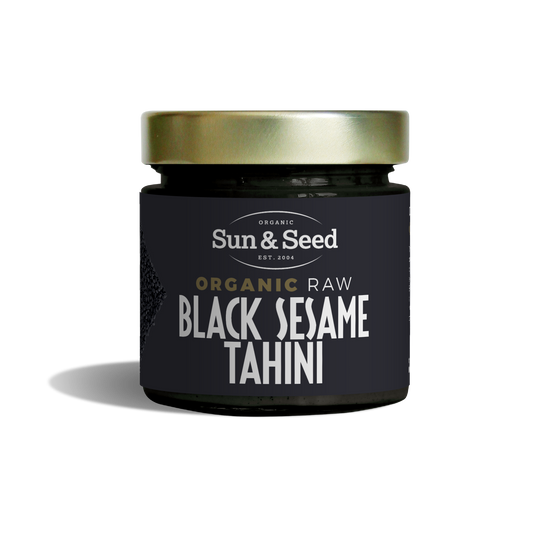
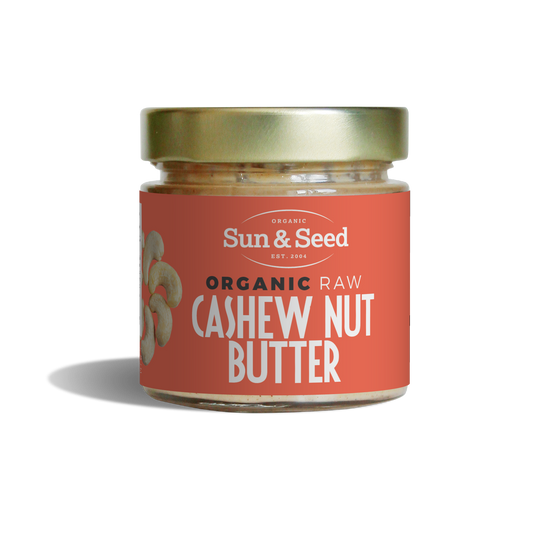
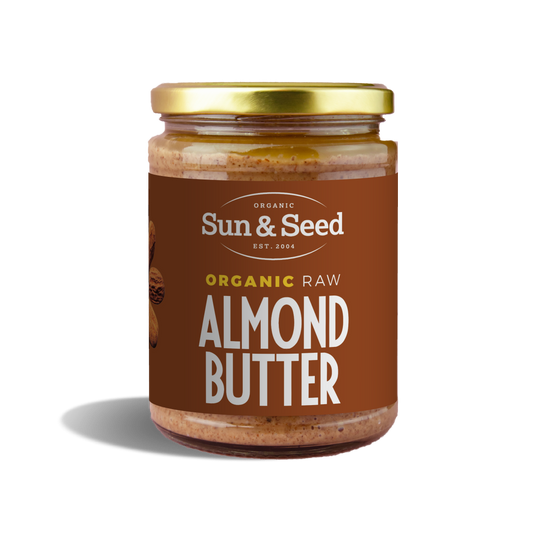
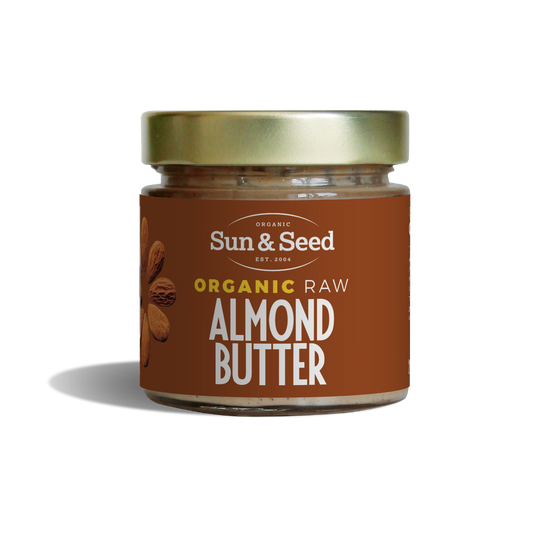
- Nut and seed butters: raw almond butter, walnut butter, cashew butter, pumpkin seed butter, sunflower seed butter and tahini.
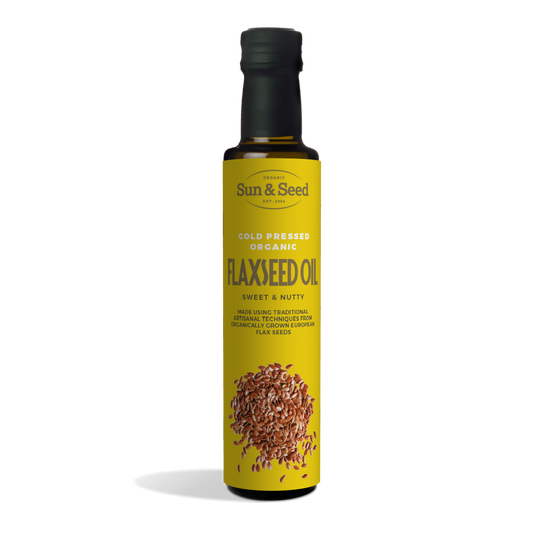
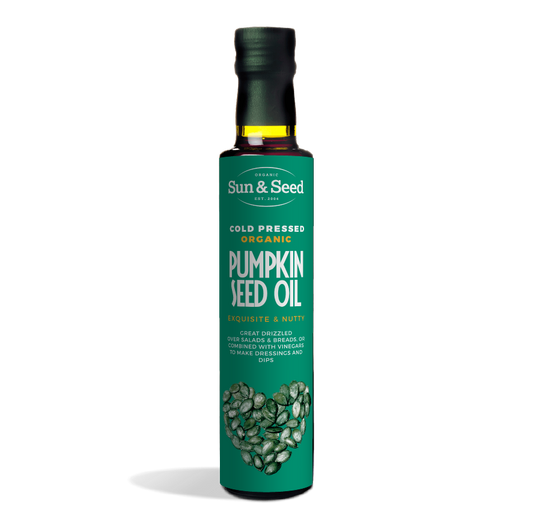
- Cold-pressed oils: flax seed oil, hemp seed oil, pumpkin seed oil and walnut oil. These unrefined oils are for cold use, such as dressings and drizzling, not for frying.
- Whole seeds: chia and hulled hemp seeds.
Whole nuts and seeds are also energy-dense, so the amount matters.
Authorised health claim
Under GB nutrition and health claims rules, one authorised claim relates to this topic: replacing saturated fats in the diet with unsaturated fats contributes to the maintenance of normal blood cholesterol levels. The claim carries conditions of use set out in the rules.
Editorial note
This article summarises published guidelines and research for general information. It is not medical advice. People with raised cholesterol, existing heart disease or a family history of it should follow the advice of their GP or dietitian.
References
- NHS. Different fats in food.
- World Health Organization (2023). WHO updates guidelines on fats and carbohydrates.
- Hooper L, et al. Reduction in saturated fat intake for cardiovascular disease. Cochrane Database of Systematic Reviews, 2020. Cochrane summary.