Independent research, explained simply. This article describes a published study. It is not a claim about any Sun & Seed product.
The paper
Whitehead A, Beck EJ, Tosh S, Wolever TMS. Cholesterol-lowering effects of oat β-glucan: a meta-analysis of randomized controlled trials. American Journal of Clinical Nutrition, 2014;100(6):1413-1421. DOI: 10.3945/ajcn.114.086108. Record and abstract: Lancaster University repository.
What is beta-glucan?
Beta-glucan is a type of soluble fibre found in oats. In the gut it dissolves and forms a thick, gel-like mixture. Researchers have long wondered whether that gel changes how the body handles cholesterol. Food regulators in several countries already approve health claims for oat fibre at around 3g of beta-glucan a day, and this paper was written to check that claim against all the evidence, including the many trials published since earlier reviews.
The question
If people eat at least 3g of oat beta-glucan a day, does their blood cholesterol come down compared with people eating a comparison diet? And do things like dose, trial length or starting cholesterol change the answer?
How the study was done
This is a meta-analysis of randomised controlled trials, which means the researchers collected every suitable trial and statistically combined their results. Randomised trials are the strongest kind of human study, because people are assigned to a diet by chance, so the groups start out alike. The team searched PubMed, AGRICOLA and Scopus from 1966 to June 2013, and also included in-house reports from a company, CreaNutrition AG. They found 28 trials giving 3.0 to 12.4g of oat beta-glucan a day, lasting 2 to 12 weeks, and combined them using random-effects models, which allow for real differences between trials.
What they found
All figures are average differences compared with the control diet. A 95% confidence interval (CI) is the range the true value probably sits in. The P value shows how unlikely a result this big would be by chance alone.
- LDL (“bad”) cholesterol: lower by 0.25 mmol/L (95% CI 0.20 to 0.30; P < 0.0001).
- Total cholesterol: lower by 0.30 mmol/L (95% CI 0.24 to 0.35; P < 0.0001).
- HDL cholesterol and triglycerides: no significant change.
- Dose and duration: within the ranges studied (3.0 to 12.4g a day, 2 to 12 weeks), neither significantly changed the size of the effect.
- Starting point: the LDL reduction was larger in people whose LDL was higher to begin with.
- Diabetes: LDL and total cholesterol fell more in people with diabetes, though the authors note this rests on few studies.
To put the size in context, 0.25 mmol/L is a modest average shift, not a dramatic one. Individual results will vary around it.
The limits
- It is an average across many people. It does not predict what will happen to any one person.
- The trials were short, 2 to 12 weeks. The paper tells us about blood cholesterol, which is a risk marker, not about heart attacks or long-term health.
- The trials differed. They used different oat products and amounts, so a single number hides real variation. The authors flagged heterogeneity between studies.
- The diabetes and baseline-LDL findings come from subgroup analyses, which are weaker evidence than the main result.
- Some of the evidence came from in-house company reports as well as published trials, which is worth knowing when weighing the results.
What it does not show
The 3g figure is the minimum amount the researchers required for a trial to be included. It is not a proven threshold or a target for everyone. The paper does not test any particular breakfast cereal, flake or product, and the amount of beta-glucan in oats depends on the variety and on how they are processed. So it does not tell you that a bowl of any given oats will deliver 3g. It also does not show that oats treat or prevent any condition.
In our kitchen
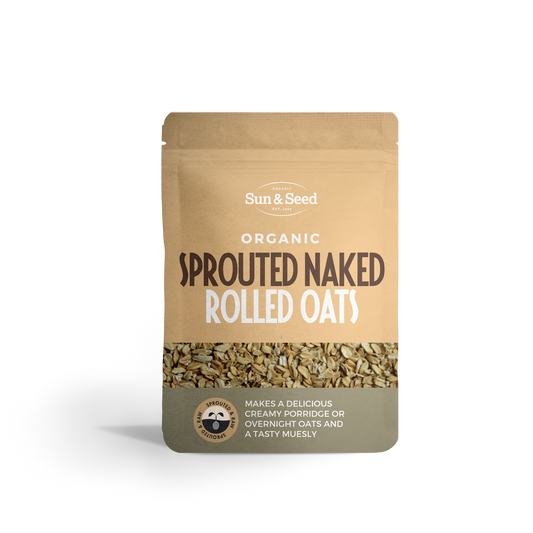
We find this one of the clearer pieces of nutrition science: randomised trials, pooled, pointing in the same direction. For us it is a reason to enjoy oats as an everyday wholegrain, and a reminder to read labels, because the beta-glucan content varies. We have not measured the beta-glucan content of our own oats for this article, so we make no claim for them. Porridge with seeds and a spoonful of nut butter remains a fine breakfast on taste alone.

Sources
- Whitehead A, et al. Am J Clin Nutr 2014;100(6):1413-1421. doi.org/10.3945/ajcn.114.086108
- Abstract and record: Lancaster University repository; University of Wollongong repository