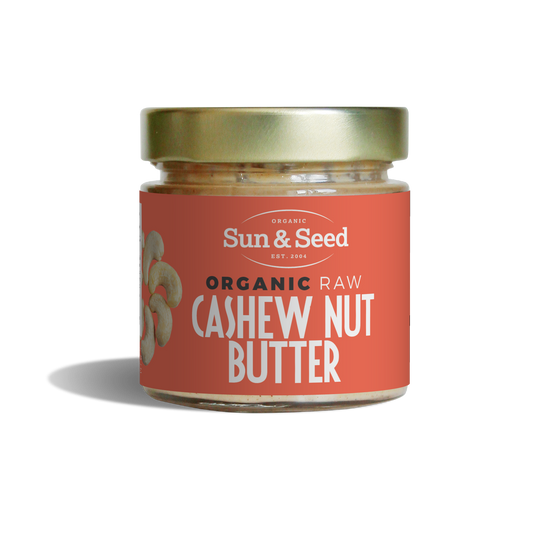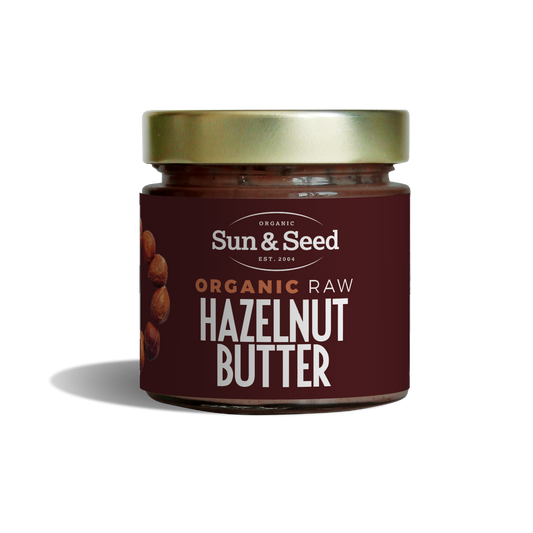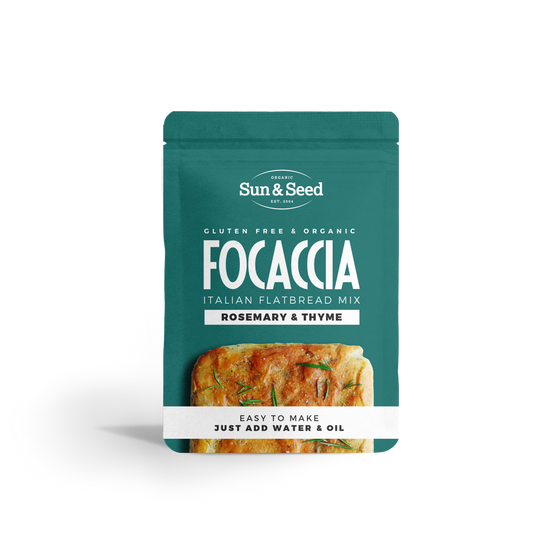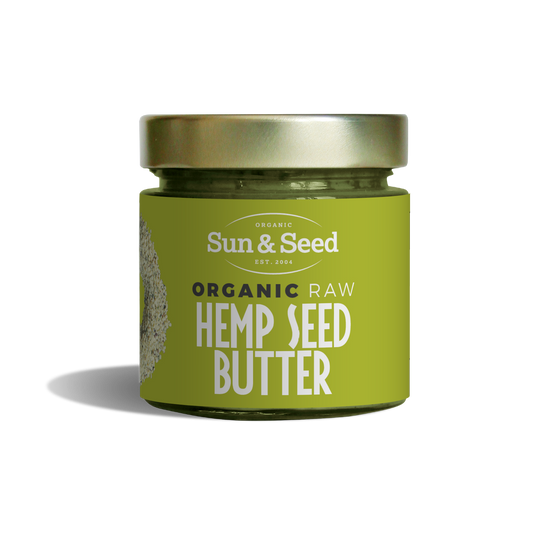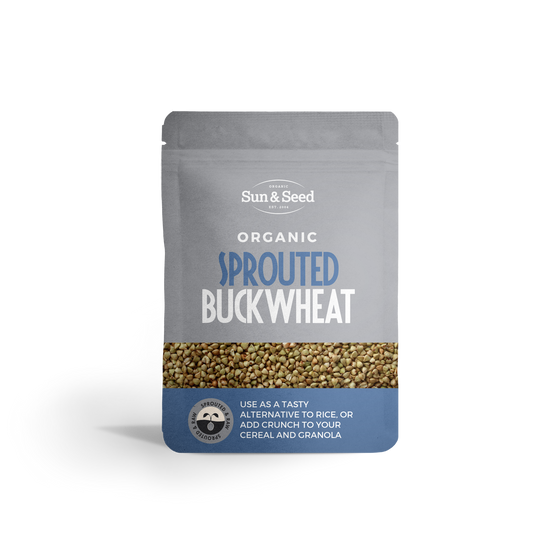
This butter is made from raw cashews and a touch of vanilla, and it tastes like something much more indulgent. It is the jar people open for one taste and end up three spoonfuls deep.
What is in the jar
Organic Raw Cashew & Vanilla Butter is organic raw cashew nuts blended with 1% organic vanilla powder, cold-milled until perfectly silky. That is the whole ingredients list: cashews and vanilla, with no sugar added.
Flavour
Naturally sweet and aromatic, with a clean, creamy cashew flavour and warm, floral vanilla. The texture is smooth and spoonable, almost dessert-like, and it melts into warm dishes. In sweet recipes it behaves like a light cashew-vanilla creme, and in savoury ones it adds a gentle sweetness that suits roasted vegetables, grains and warm bowls.
A short history of the vanilla
Vanilla comes from an orchid. The European Commission's page on Réunion vanilla notes that it is native to Central America, and a long read in Nautilus says the vanilla orchid is found in its native country of origin, Mexico. Growing it elsewhere had a catch. The European Commission page explains that vanilla from the botanical gardens of Paris was introduced to La Réunion in 1821 and grew well, but produced no fruit, because no insect or bird capable of pollinating it was to be found on the island. For about twenty years the island's vanilla stayed infertile.
The answer came in 1841 from Edmond Albius, a 12-year-old enslaved boy on Réunion. Both sources agree on the year and his age. He found a way to pollinate the flower by hand: the European Commission describes using a stick to lift the wall that separates the flower's male and female parts, then rubbing them together gently, while Nautilus mentions a needle or toothpick. The European Commission adds that almost all vanilla is still pollinated using Albius' method today. In other words, the vanilla in your jar very likely depends on a technique worked out by a boy nearly two centuries ago.
And the cashew
The cashew has its own travel story. Prosea, the plant resources database, says the tree originated in north-eastern Brazil, and that the Portuguese later introduced it to India and East Africa. Britannica notes that the plant is grown for its curved seeds, called cashew "nuts" though they are not true nuts. Our article Cashews, from Brazil to the world tells the full tale.
Good to know: nutrition per 100g
These are the figures from our product page.
- Energy: 2400kJ / 575kcal
- Fat: 46g (saturates 8g)
- Carbohydrate: 24g (sugars 5g)
- Fibre: 3g
- Protein: 15g
- Salt: 0g
Labels calculate energy with fixed factors per gram: 37kJ for fat and 17kJ for protein and for carbohydrate. Protein works out at 15g x 17kJ = 255kJ, about 11% of the 2,400kJ. That is below the 12% a food needs before it can be called a source of protein, so we make no protein claim for this butter. On the NHS traffic-light guide, more than 17.5g of fat per 100g counts as high, and more than 5g of saturates is high. Sugars of 5g or less count as low, and salt of 0.3g or less is low. A 15g spoonful gives about 86kcal, which is a little over 4% of the UK adult reference intake of 2,000kcal.
How to use it
- Spread on toast, pancakes, waffles or brioche.
- Swirl into porridge, yoghurt, chia pudding or smoothie bowls.
- Pair with bananas, berries, figs, peaches or pears.
- Fold into cookies, cakes, muffins and tarts, or use as a filling in our cashew and vanilla butter filled donuts.
- Drizzle over ice cream or warm oats.
- Stir into coffee or hot chocolate for a gentle vanilla twist.
Try our vanilla cashew chia pudding.
Serving idea
For a quick dessert, warm a spoonful of the butter for a few seconds so it loosens, then spoon it over sliced banana or poached pears. A little goes a long way, because the flavour is rich and the butter is dense.
Allergens and diet
Contains cashews. May contain traces of other nuts and sesame. Gluten, dairy and soy free. Suitable for vegans and vegetarians.

Sources
- Vanille de l’Île de la Réunion PGI (European Commission)
- The boy who was king of vanilla (Nautilus)
- Anacardium occidentale (Prosea, Plant Resources of South-East Asia)
- Cashew (Britannica)
- Regulation (EC) No 1924/2006, Annex: nutrition claims and conditions (legislation.gov.uk)
- Regulation (EU) No 1169/2011, Annex XIV: energy conversion factors (legislation.gov.uk)
- Regulation (EU) No 1169/2011, Annex XIII: UK reference intakes (legislation.gov.uk)
- How to read food labels (NHS)